Home » Without Label » Male And Female Flower Parts / Flowers and Fruits Biology Lesson PowerPoint, Parts of ... / The female plant parts have the potential to produce seeds and fruit.
Male And Female Flower Parts / Flowers and Fruits Biology Lesson PowerPoint, Parts of ... / The female plant parts have the potential to produce seeds and fruit.
Male And Female Flower Parts / Flowers and Fruits Biology Lesson PowerPoint, Parts of ... / The female plant parts have the potential to produce seeds and fruit.. Pistil stamen receptacle sepal petal tendril. These types of flowers are called imperfect. Parts of the pistil include: Pollen consists of male reproductive cells. Also, what are the male and female reproductive parts of a flower?
The flowers of plants that don't are known as incomplete flowers. Not all species produce flowers with all four parts; Roses, lilies, and dandelions have both male and female reproductive organs; The female plant parts have the potential to produce seeds and fruit. Pollen consists of male reproductive cells.
Plant Growth and Reproduction | The Biology of Sex and ... from bio1220.biology.gatech.edu Flowers that contain both androecium and gynoecium are called hermaphroditic. Roses, lilies, and dandelions have both male and female reproductive organs; Female hazel flower in january. The male and female reproductive systems. The stamen consists of the anther and a filament. Not all species produce flowers with all four parts; Most flowers are hermaphrodite where they contain both male and female parts male and female flower parts. Sepals, petals, stamens (the male parts of a flower) and either carpels or a pistil (the female parts of the flower).
In flowering plants, these structures can be borne together in a single bisexual flower, or the flowers can be only male (staminate) or only female (pistillate).
Carpels may be called the female parts of a flower and collectively form the gynoecium. Year 5 pupils explaining the parts of a flowering plant. Roses, lilies, and dandelions have both male and female reproductive organs; It traps and holds pollen that touches it. The stigma, the style, and the ovary. The pistil includes the ovary, the style and the stigma. The female elements are collectively called the pistil. Finally in the middle there are carpels, which at maturity contain one or more ovules, and within each ovule is a tiny female gametophyte. Stamens may be called the male parts of a flower and collectively form the androecium. The anthers carry the pollen. When labelling a flower, the term pistil can be used to. The flowers of plants that don't are known as incomplete flowers. Just like the stamen (male), the female pistil consists of various parts, each with specific functions.
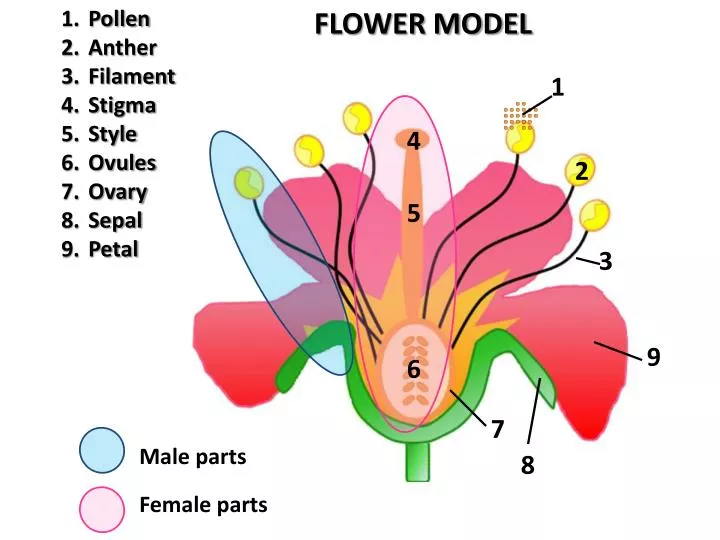
Female parts=6/5 stigma ovary stamen ovules male parts =3/2 anther filament carmen these are some of the male and female parts of a flower. The gynoecium is the female sexual organ, which produces the female gametophyte, ovule. Flowers contain vital parts, including petals, which form flowers. Flowers, such as roses or lilies, have both male and female parts called perfects. some flowers, such as those found on cucumbers or melons, have all male or all female parts but not a combination of both. Carpels may be called the female parts of a flower and collectively form the gynoecium.
PPT - Female parts PowerPoint Presentation, free download ... from image1.slideserve.com The male and female parts of a flower are the _____. Male parts are collectively termed the stamen. Hence known as complete or perfect flowers. The female part of the plant is the pistil, and the male part of the plant is the stamen. As a plant's reproductive part, a flower contains a stamen (male flower part) or pistil (female flower part), or both, plus accessory parts such as sepals, petals, and nectar glands (figure 19). The male and female reproductive systems. Unisexual flowers and bisexual flowers. Perfect flowers have both male (androecium) and female (gynoecium) reproductive structures, including stamens and an ovary.
Year 5 pupils explaining the parts of a flowering plant.
The male and female reproductive systems. The male parts of the flower are called the stamens and are made up of the anther at the top and the stalk or filament that supports the anther. Each flower's pistil is made up of three main parts: The male parts of the flower (each consists of an anther held up on a filament) anthers. The main flower parts are the male part called the stamen and the female part called the pistil. Asked 146 days ago|1/21/2021 2:42:02 pm. A flower may have only female parts, only male parts, or both. The flowering plant that have all male body parts or all female body parts or it has a combination of both male and female parts are called perfect plant. Sepals protect the flowers before they bloom. Finally in the middle there are carpels, which at maturity contain one or more ovules, and within each ovule is a tiny female gametophyte. Perfect flowers have both male (androecium) and female (gynoecium) reproductive structures, including stamens and an ovary. Complete flower is the answer. Imperfect or incomplete flowers are either known as pistillate (female) having a functional pistil or staminate (male) having a functional stamen.
Finally in the middle there are carpels, which at maturity contain one or more ovules, and within each ovule is a tiny female gametophyte. The female plant parts have the potential to produce seeds and fruit. Not all species produce flowers with all four parts; Most flowers have male and female parts that allow the flower to produce seeds. Perfect flowers have both male (androecium) and female (gynoecium) reproductive structures, including stamens and an ovary.
Parts of a Flower Diagram with explanations. | Parts of a ... from myartteacher.com The stamen, which is male, produces pollen; The stamen has two parts: The female plant parts have the potential to produce seeds and fruit. Female hazel flower in january. Considered the large lips and this structure is the most visible part of the external female sexual. A bisexual flower is a flower that contains all the four whorls such as petals, sepals, the male reproductive structure (stamen) and female reproductive structure (pistil). The gynoecium is the female sexual organ, which produces the female gametophyte, ovule. The anthers carry the pollen.
The presence of these parts differentiates the flower into complete or incomplete.
So, if you spot the long hazel catkins, watch out for the tiny little female flowers too. A bisexual flower is a flower that contains all the four whorls such as petals, sepals, the male reproductive structure (stamen) and female reproductive structure (pistil). — female parts the female part of the flower is known as the pistil. The stamen has two parts: Most flowers are hermaphrodite where they contain both male and female parts male and female flower parts. Perfect flowers have both male (androecium) and female (gynoecium) reproductive structures, including stamens and an ovary. A flower may have only female parts, only male parts, or both. The male parts of the flower (each consists of an anther held up on a filament) anthers. The pistil includes the ovary, the style and the stigma. In hazel, the male and female flowers grow on the same tree: Asked 146 days ago|1/21/2021 2:42:02 pm. Female parts=6/5 stigma ovary stamen ovules male parts =3/2 anther filament carmen these are some of the male and female parts of a flower. The pistil, which is female, houses the ovule.